Table of contents
What if a tooth still aches long after its root canal? Sometimes a root canal doesn’t heal, and infection stays behind at the very tip of the root. When that happens, a minor surgery called an apicoectomy can remove the problem and preserve the tooth. An apicoectomy, or root-end surgery, treats the small pocket of infection a standard root canal cannot reach. It is a routine procedure our endodontist performs, often for patients near Nellie Gail Ranch.
Key Takeaways
- Most root canals heal, but a few do not. Infection can linger at the root tip.
- When that happens, retreatment or an apicoectomy can help. Both aim to save the tooth.
- An apicoectomy removes the infected root tip. The end of the root is then sealed.
- It is a short, microsurgical procedure. Most people recover within a day or two.
- The alternative is usually extraction. Keeping the natural tooth is almost always preferable.
What Happens When a Root Canal Doesn’t Heal?
Now and then, a treated tooth does not settle down the way it should. As Healthline explains, an apicoectomy is performed when standard root canal therapy is not enough to clear an infection at the root tip. Persistent inflammation there can keep a tooth sore or tender long after treatment. Rather than give up on the tooth, an endodontist can treat the problem right at its source. That surgical option is often what rescues a tooth that would otherwise be lost. It targets the infection precisely, at the one spot the crown cannot reach, and for many it is what saves a tooth that once seemed doomed. That focused approach is what makes it so effective. An endodontist has the tools and training for exactly this, so it is a well-established fix rather than a last resort.
Why Doesn’t Every Root Canal Heal?
Root canal systems are surprisingly complex. Tiny branching canals, an inaccessible root tip, or a fracture can leave infected tissue behind. Sometimes bacteria settle in the bone right around the apex, where cleaning through the crown cannot reach. In those cases, the lingering infection has to be handled from the outside. Working at the root tip directly clears what standard treatment left behind, which makes it a targeted fix for a stubborn problem. Even the best initial treatment cannot always reach every branch, since complex anatomy is simply part of how teeth are built. That is why a specialist’s eye matters so much.
What Is an Apicoectomy Like?
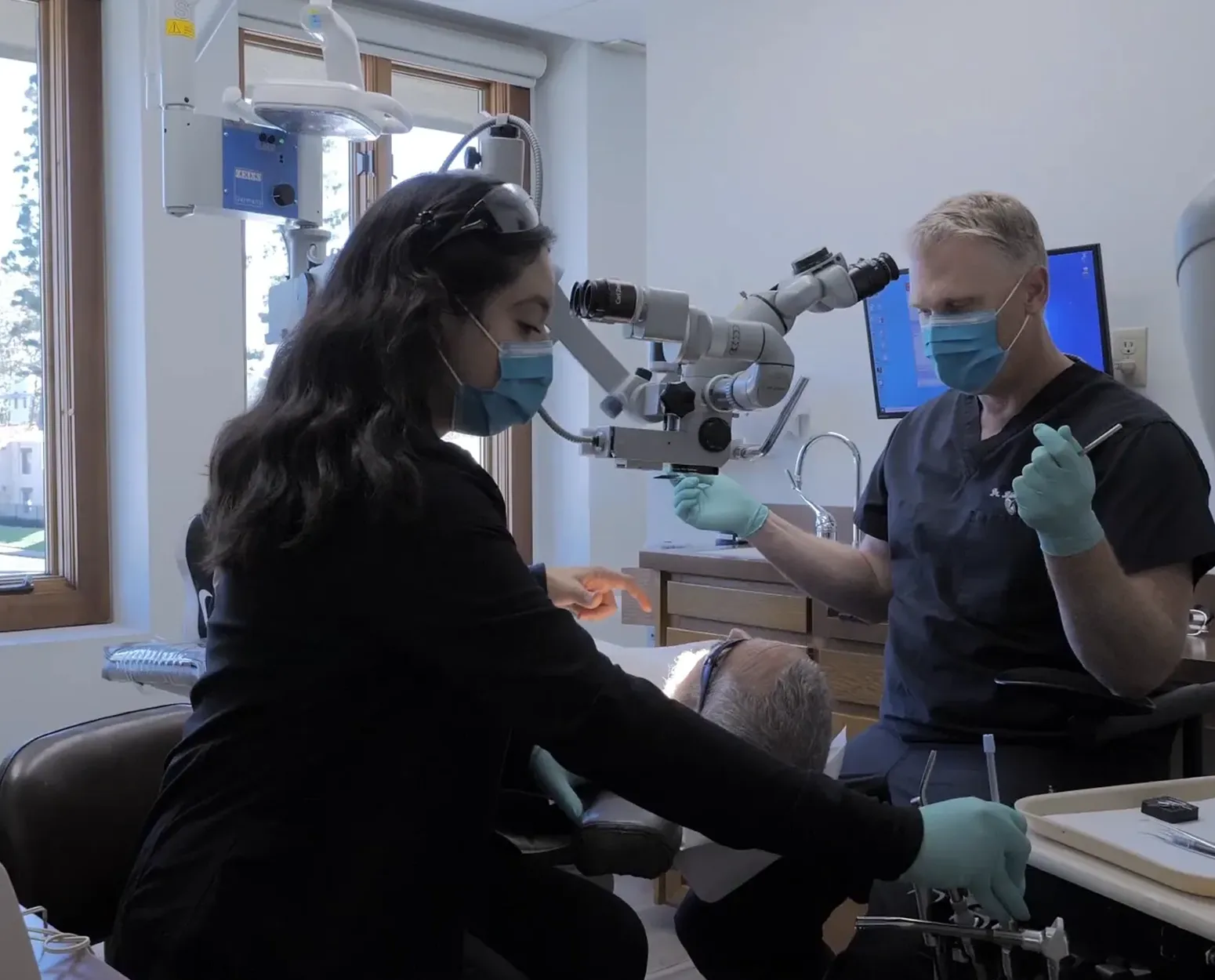
An apicoectomy is a precise, minor surgery done under local anesthesia. Our endodontist makes a tiny opening in the gum, removes the root tip along with infected tissue, and seals the end of the root. The procedure usually takes under an hour and is performed with a surgical microscope. Most people feel little during it, and normal activities are usually fine by the following day. The microscope lets our endodontist work with great precision, and that accuracy is part of why success rates are so high. You will be numb and comfortable the whole time, and the small incision heals faster than most people expect.
How Long Is Recovery?
Recovery from an apicoectomy is usually quick and mild. Some swelling and tenderness are normal for the first day or two as the gum heals. Simple pain medication and soft meals make those first days easier. Gentle brushing around the area helps it stay clean while it heals. The underlying bone then continues to mend quietly over the following months. Most people manage with very little disruption to their week, and there is rarely any need to miss work.
Is an Apicoectomy Better Than Extraction?
Your own tooth is nearly always worth saving when it can be. An apicoectomy is often the final option to save a tooth before removal is considered. A natural tooth simply performs better than any replacement. Compared with an extraction plus an implant or bridge, it is usually simpler and more conservative. Preserving your own tooth is nearly always the goal, and an implant or bridge means more visits and more cost. Saving the tooth now can also spare you years of future treatment. Our endodontist can explain if it is the right choice for your tooth, since that decision is always tailored to your situation.
Saving a Tooth That Won’t Heal
So, what happens when a root canal doesn’t heal? Instead of losing the tooth, an apicoectomy can remove the stubborn infection at the root tip and give it a fresh start. This microsurgical treatment is comfortable, quick, and highly effective in skilled hands. It has spared countless teeth that once seemed destined for removal. The goal is always to keep what nature gave you. If a treated tooth is still bothering you, an evaluation can reveal if it is time for this step.
If you want to learn more about options for a root canal that has not healed, visit our Apicoectomy in Laguna Hills, CA page to schedule a consultation.